Growing Up with Big Dreams but Limited Opportunities
Growing up in a low-income neighbourhood taught me lessons long before I entered the workforce. I learned that talent and ambition do not always determine a young person’s future, access does.
Like many youth, I had dreams of building a career that reflected my passions and allowed me to make a difference. However, as I began searching for employment, I quickly realized that wanting an opportunity and being able to access one were two very different things.
For many young people growing up in communities affected by poverty, employment is not just about finding the “right” job. It is often about finding any opportunity that opens a door. When financial pressures are part of everyday life, pursuing your passion can begin to feel like a privilege rather than a realistic goal.
This is a reality many youth experience, but it is not always visible on a résumé. Behind every application is a story of navigating barriers, balancing responsibilities, and continuing to believe in a future that can sometimes feel uncertain.
The Invisible Barriers
When people think about barriers to employment, they often think about education or work experience. Those barriers are real, but there are others that are much harder to see.
Growing up where I did meant there were fewer local opportunities, fewer professional connections, and fewer examples of people from similar backgrounds navigating certain career paths. I often found myself applying for jobs based on what was available rather than what aligned with my passions not because I lacked ambition, but because opportunity was not always easy to access.
Something that stayed with me throughout my journey was the advice I received from mentors and adults around me. Their intentions came from a place of care; they wanted to protect me from disappointment. However, I was sometimes encouraged to avoid opportunities that seemed “too big” or out of reach.
Whether it was applying for competitive positions, pursuing leadership opportunities, or stepping into spaces where I questioned if I belonged, I was often reminded to be realistic.
Looking back, I understand the intention behind that advice. However, I also recognize that when young people are consistently encouraged to play it safe, they may begin to believe certain opportunities are not meant for them. If we only encourage youth to pursue opportunities, they already feel qualified for, they may never discover what they are truly capable of achieving.
Choosing to Keep Moving Forward
Despite those challenges, I refused to let my circumstances define my future.
I began searching for opportunities that would help me grow employment workshops, volunteer experiences, networking events, and mentorship opportunities. Each experience became a stepping stone, even if it was not directly connected to where I ultimately wanted to be.
One opportunity that continues to stand out in my journey was my first team lead role here at JHSD. Receiving that opportunity brought me back to the younger version of myself, the youth who had big dreams but often questioned whether certain spaces were meant for someone like me.
I remember feeling excited, grateful, and nervous. A part of me wondered if I was ready, if I had enough experience, or if I truly belonged in a position where others would look to me for guidance and leadership.
This time, I chose not to let fear make the decision for me. I stepped outside of my comfort zone, trusted my abilities, and accepted the opportunity, even though it felt bigger than anything I had taken on before.
Receiving that role gave me a feeling I will always remember: the feeling of being seen. My manager took a chance on me and recognized my potential not only for what I had already accomplished, but for what I could become. That belief meant more than receiving a title; it reminded me that sometimes someone else can see your abilities before you fully see them yourself.
That experience changed how I viewed myself. It taught me that leadership is not about being perfect or having every answer. It is about being willing to learn, support others, and continue growing.
What My Experience Has Taught Me
Today, as someone who works alongside young people, I carry those experiences with me.
I make a conscious effort not to discourage youth from pursuing opportunities simply because they seem ambitious. Instead, I encourage them to apply for the scholarship, interview for the leadership role, submit the application, and take the chance even if they do not believe they will succeed.
Rejection can become a learning experience, but an opportunity never pursued is one that can never lead to growth.
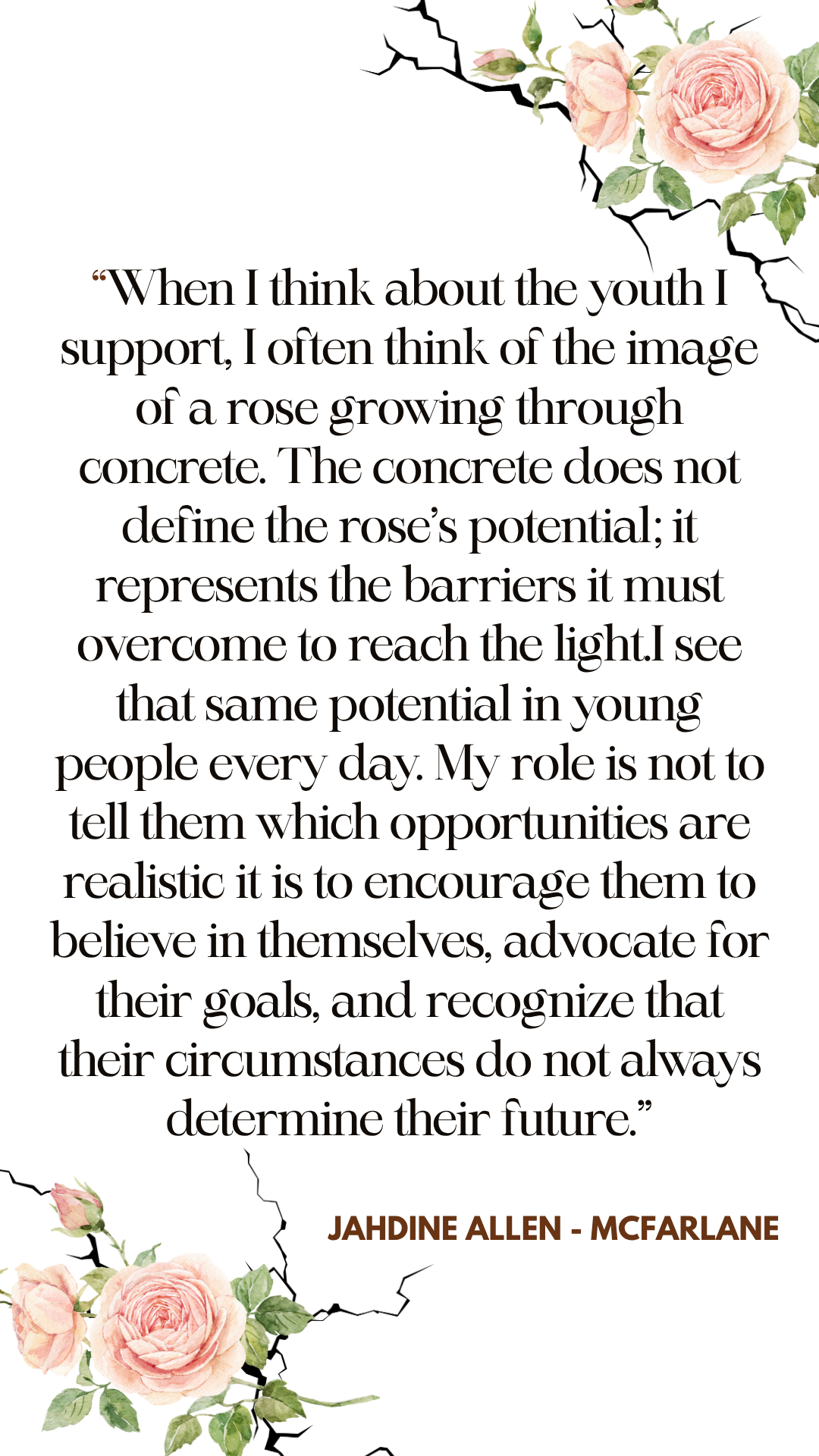
When I think about the youth I support, I often think of the image of a rose growing through concrete. The concrete does not define the rose’s potential; it represents the barriers it must overcome to reach the light.
I see that same potential in young people every day. My role is not to tell them which opportunities are realistic, it is to encourage them to believe in themselves, advocate for their goals, and recognize that their circumstances do not determine their future.
What I Hope Workforce Professionals See
Many young people from low-income communities have developed resilience, adaptability, and problem-solving skills through navigating challenges. These strengths may not always appear on a résumé, but they are valuable qualities that deserve to be recognized.
Creating equitable opportunities is not about lowering expectations. It is about recognizing that not every young person starts from the same place.
Sometimes, a manager taking a chance, a mentor offering encouragement, or an employer opening a door can become a life changing moment for a young person.
Looking Ahead
I hope we continue building systems where a young person’s future is not determined by their neighbourhood, income, or the opportunities they did not have access to.
Every young person deserves to be seen for their potential, not simply their circumstances.
A Question for You
As someone who supports youth whether as an employer, educator, mentor, or workforce professional how can you help create opportunities that encourage young people to see what is possible, believe in their potential and take the next step toward the future they imagine for themselves?